What is Black History Month?
Black History Month is a yearly observance that celebrates the history, achievements and culture of Black people, and teaches the parts of history that were left out of the usual story. It began in the United States. In 1926 the historian Carter G. Woodson announced the first "Negro History Week", held in February to fall on the birthdays of Abraham Lincoln and Frederick Douglass. In February 1976 President Gerald Ford officially recognised Black History Month (West, 2020).
The UK has its own history of the month. The first official observance in Britain took place in October 1987. It was pushed for by Black activists in the 1980s, partly as a response to Margaret Thatcher's government and its approach to the school curriculum. The Greater London Council (GLC), led by Ken Livingstone, was a key place where this work happened. Its Ethnic Minorities Unit included Akyaaba Addai-Sebo and Ansel Wong, who were central to the campaign, and Linda Bellos, leader of Lambeth Council, also supported it (West, 2020).
The organisers did not all agree on why October was chosen. Addai-Sebo pointed to the start of the academic year and October's importance in African culture. Bellos said the date suited the availability of a planned guest, and Wong said it helped set the British month apart from the American one (West, 2020). Whichever reason is right, October is the month it is marked in the UK today, and I am writing this research in October.
What it is about
In Britain, Black History Month was political from the start. West (2020) explains that it was linked to the fight against apartheid in South Africa and against institutional racism at home, and that its founders described it as a deliberate decision to put racial justice and proper historical representation into the British context. It also looked beyond Britain: speakers included American cultural nationalists, Afrocentric scholars and African freedom fighters, so it covered the wider experience of Black people across the world (West, 2020).
West (2020) argues that the month still has an important educational role, but that it has become increasingly marked by tokenistic appeals to diversity. I think this is why researching real artists in depth is useful. Looking at how particular Black musicians made particular tracks, and the conditions they made them in, is a more honest way to mark the month than a quick list of famous names.
Hip-hop: where it began and where it went
Hip-hop started in the South Bronx, New York, in the 1970s. Chang (2005) describes a borough that had been damaged by city planning, loss of jobs and the destruction of housing, where young Black and Latino people made their own culture with the equipment they could get hold of. Rose (1994) argues that rap grew out of this post-industrial setting and that it built on African-American traditions of oral storytelling and rhythm, using technology such as turntables and samplers in new ways, including layering and repetition.
A party on 11 August 1973 at 1520 Sedgwick Avenue, played by DJ Kool Herc (Clive Campbell), who had moved to New York from Jamaica, is commonly named as the moment the style began. Herc extended the "break" of funk records by switching between two copies on two turntables, and he drew on the Jamaican sound-system tradition (Chang, 2005). From there hip-hop grew into four elements: DJing, MCing (rapping), breaking and graffiti (Chang, 2005).
From the Bronx it spread to other US cities and into the mainstream. By the early 1990s, according to Wikipedia (2026b), West Coast hip-hop was dominating the charts, and New York rap was brought back to national attention by artists such as Wu-Tang Clan. The three artists below show three different stages of the genre's growth: the sample-based New York sound of 1993, a more live and musical Black feminist sound in 1998, and a producer-led, soul-sampling sound in 2002 to 2004.
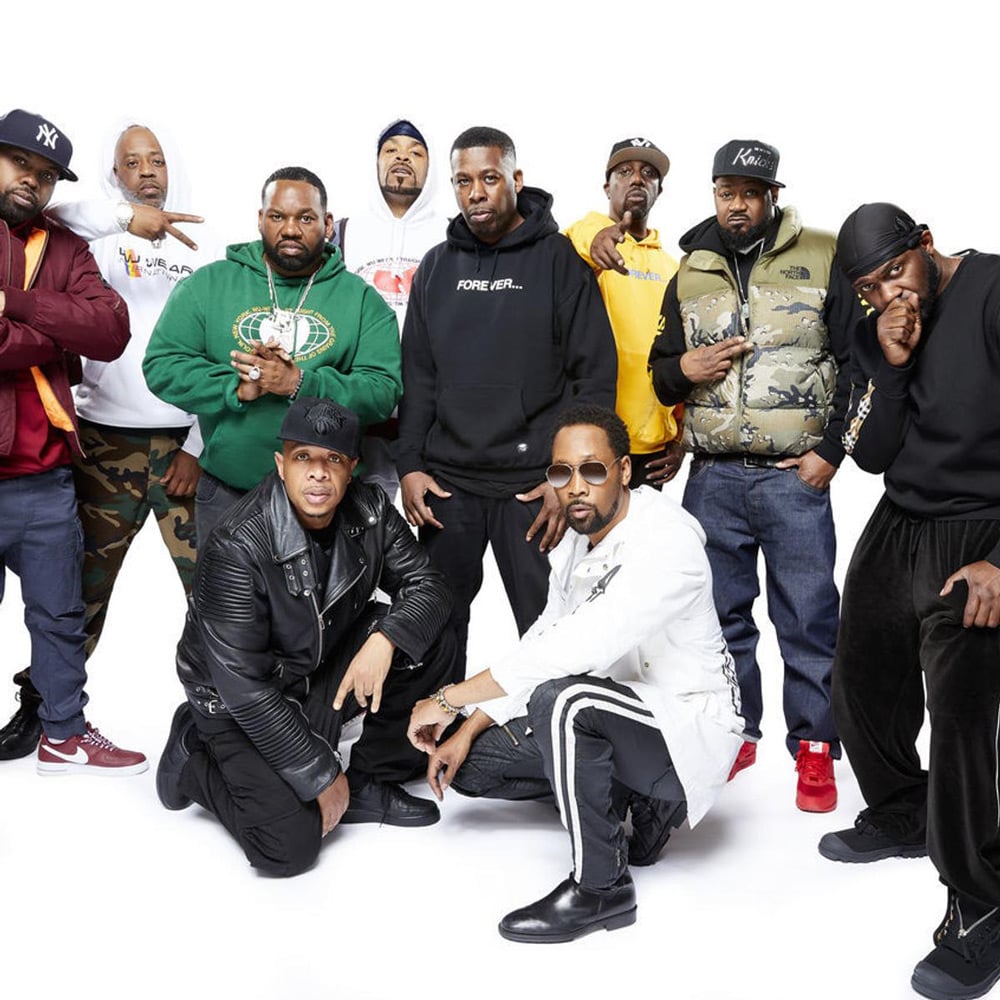
1. Wu-Tang Clan: "C.R.E.A.M."
How it was written
"C.R.E.A.M." stands for "Cash Rules Everything Around Me". The hook is sung by Method Man, and the two verses are by Raekwon, about moving to Staten Island and growing up in New York City, and Inspectah Deck, whose longer verse follows his own path from a delinquent teenager to a juvenile offender to someone who wants to mentor others (Wikipedia, 2026b). The "dollar dollar bill y'all" refrain interpolates Jimmy Spicer's 1983 track "Money (Dollar Bill Y'all)" (Wikipedia, 2026b). Its sad, story-telling tone is very different from the rest of the album (Wikipedia, 2026b).
How it was recorded and produced
RZA produced the track, and also produced, mixed, arranged and programmed the whole album. It was recorded at Firehouse Studio in New York City between late 1992 and early 1993 on a very small budget, with up to eight of the nine members often in the room at the same time (Wikipedia, 2026a). The beat is built from the opening piano riff and drums of The Charmels' 1967 soul song "As Long As I've Got You", looped all the way through (Wikipedia, 2026b). Raekwon says the beat dates back to around 1989 and that RZA saved it for him (Wikipedia, 2026b).
Technology
RZA built his beats on samplers. Sources do not agree on exactly which machine made which track, but between them they name three: the E-mu SP-1200, the Ensoniq EPS / EPS-16 Plus and the Ensoniq ASR-10. Wyeth (2023) says the ASR-10, combined with the SP-1200, became the main platform for most of the early Wu-Tang productions, and that the EPS had up to 41 seconds of sample time, which let him use loops rather than only single hits. RZA himself says he mostly used the ASR-10 and made his "first 100 songs" on it. He explains that its default tempo was 100 BPM, so he would often speed a sample up or change the beat's tempo to make it fit (Wilkes, 2024). The point for me is that the limits of the machines shaped the sound: short, dusty, looped samples with a rough, raw feel (Wikipedia, 2026a).
Historical, social and political context
The group came from Staten Island, one of the five boroughs of New York, and "C.R.E.A.M." describes what money, and the lack of it, meant for young Black people there. Raekwon and Inspectah Deck tell it as personal stories rather than slogans. The video, directed by Ralph McDaniels, moves from the Staten Island projects to a lavish lifestyle (Wikipedia, 2026b). The group's identity mixed kung fu films, Five Percent Nation teachings and comic books (Wikipedia, 2026a). When it came out, West Coast hip-hop was dominating the charts, and the album is credited with helping to bring New York back to national prominence (Wikipedia, 2026a; 2026b).
The audience
The first audience was young people in New York who could recognise the places and struggles described, but the track reached much further. The album reached number 41 on the Billboard 200 and number 8 on the Top R&B/Hip-Hop Albums chart, and was certified 4x platinum (Wikipedia, 2026a). "C.R.E.A.M." peaked at number 60 on the Billboard Hot 100, the highest position for any Wu-Tang Clan track, and "cream" became slang for money (Wikipedia, 2026b). In my view, it connected with a wide audience because its message about money was so direct and easy to understand.
Legacy
The album was added to the Library of Congress National Recording Registry in 2022, and RZA's sample-based production influenced producers including Kanye West (Wikipedia, 2026a). Drake and Jay-Z used the hook on "Pound Cake" in 2013 (Wikipedia, 2026b).
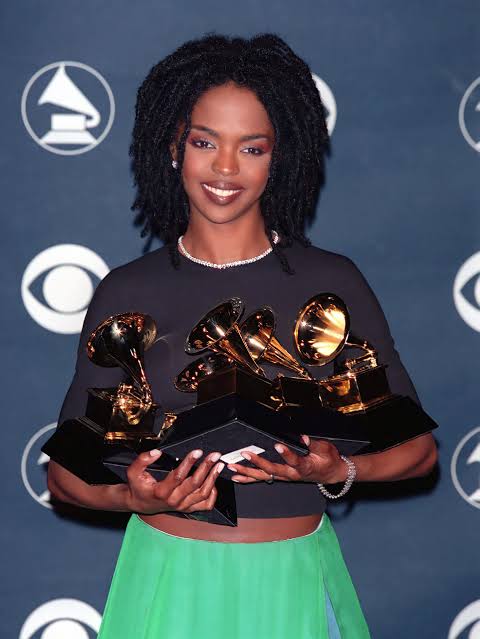
2. Lauryn Hill: "Doo Wop (That Thing)"
How it was written
Hill wrote and produced the song for her debut solo album. The lyrics are a warning to African-American men and women caught up in "the struggle": they criticise women who hide their worth and men who care more about material status than about relationships (Wikipedia, 2026d). The album as a whole is a concept about educating yourself on love, covering relationships, betrayal inside her former group the Fugees, motherhood, faith and self-determination (Wikipedia, 2026c).
The album's title echoes Carter G. Woodson's book The Mis-Education of the Negro (Woodson, 1933; Wikipedia, 2026c). Woodson is the historian who started Negro History Week, so the album links back to the history of Black History Month itself.
How it was recorded and produced
The album was recorded between 1997 and 1998 in New York, New Jersey, London and Kingston, Jamaica, with most of it made at Tuff Gong studios (Wikipedia, 2026c). Hill worked with a group of musicians called New Ark, along with Che Pope and James Poyser, and Gordon "Commissioner Gordon" Williams engineered it (Wikipedia, 2026c). Her approach was to use real players. "Doo Wop (That Thing)" credits James Poyser on piano, Rhodes, celesta, Wurlitzer and electric piano, trumpet, trombone and saxophone players, the Indigo Quartet on strings, and a team of backing vocalists, with drum programming and DJ elements added on top. It was recorded at Marley Music in Kingston and Chung King Studios in New York, and mixed at Sony Music Studios (Wikipedia, 2026d).
There was also a dispute over credit. New Ark sued in 1998 over songwriting and production credits, and the case was settled in February 2001 for a reported $5 million (Wikipedia, 2026c).
Technology
This is where Hill's approach differs most from RZA's. Instead of building the track from samples, the album relied on live instruments such as harps, strings, timpani, organs, clarinets, Hammond organ, flute and harpsichord, and Hill said she wanted it "not too technically perfect" (Wikipedia, 2026c). Drum programming and DJ scratching sit alongside the live band, so the song is a mix of hip-hop production and older soul and doo-wop styles. The sources I found do not say which recording software or tape machines were used, so I have not guessed.
Historical, social and political context
The album has been analysed as Black feminist work, praised for giving a woman's perspective and for addressing the difficulties faced by Black women and African Americans. Hill's pregnancy and the media attention on it shaped the writing, and "To Zion" is about her decision to have her child despite pressure to terminate the pregnancy (Wikipedia, 2026c). Some critics found the message of "Doo Wop (That Thing)" conservative, even though its chorus seems to promote equality between the sexes (Wikipedia, 2026d). The video, filmed in Washington Heights in Manhattan, uses a split screen to place Hill in 1967 style next to Hill in 1998 hip-hop style, so the music's history and the present are shown together (Wikipedia, 2026d).
The audience
This was a mass audience. The album went to number 1 on the Billboard 200 with 422,000 first-week sales, the most for a woman at the time, and has sold around 20 million copies worldwide (Wikipedia, 2026c). The single reached number 1 on the Billboard Hot 100 and number 3 on the UK Singles chart (Wikipedia, 2026d). In my view the mix of rap, singing and soul made it work for fans of hip-hop, R&B and pop at the same time.
Legacy
Hill won five Grammys at the 41st ceremony, including Album of the Year, which is reported as the first for a hip-hop artist (Wikipedia, 2026c). The video won Video of the Year at the 1999 MTV Video Music Awards, the first hip-hop video to do so (Wikipedia, 2026d). The album was added to the Library of Congress National Recording Registry in 2014, the first female rap recording included, and to the Grammy Hall of Fame in 2024 (Wikipedia, 2026c).
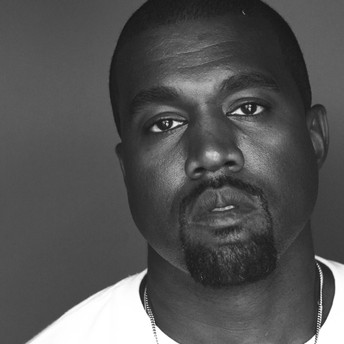
3. Kanye West: "Through the Wire"
How it was written
On 23 October 2002 West fell asleep at the wheel of his rented Lexus after leaving a studio at about 3 a.m. The crash was nearly fatal and his jaw was wired shut during reconstructive surgery at Cedars-Sinai Medical Center. About two weeks after he was admitted he recorded the song with his jaw still wired, and the title refers to those wires (Wikipedia, 2026f). So the song is a rap about the accident, made straight from the experience of it. West had struggled to get a deal as a rapper because he did not fit the gangster image, and the label first saw him as a producer (Wikipedia, 2026e).
How it was recorded and produced
The hook is a pitch-shifted, sped-up version of Chaka Khan's 1985 single "Through the Fire", and West also loops a short piece of the original's instrumental outro (Wikipedia, 2026f). This is the style called "chipmunk soul": speeding up and pitching up soul vocals to make warm, instantly recognisable melodies, together with his own drum programming, string arrangements and gospel choirs (Wikipedia, 2026e; 2026f). Khan's clearance was held back until her son showed her the video, and it was cleared about two weeks later. The song's writing credit goes to David Foster, Tom Keane and Cynthia Weil, who wrote the original (Wikipedia, 2026f).
Technology
Much of The College Dropout was produced in a two-bedroom apartment in Hoboken, New Jersey, where West turned one room into a home studio. In a 2020 GQ interview, as reported by Wikipedia (2026e), he said that about 30 to 40 percent of the album was recorded on a Roland VS-1680. Compared with RZA's borrowed samplers in a small rented studio, this shows how much music could now be made at home. The sources I read did not say what sampler or software he used for this particular track, so I have not claimed one.
Historical, social and political context
The album's themes include education and the decision to leave college (which his mother, a university professor, took badly), religion, consumerism and low-wage work, and racism and institutional prejudice (Wikipedia, 2026e). It helped spark a mid-2000s revival of socially conscious rap, an alternative to the violent and product-heavy pop rap of the time (Wikipedia, 2026e). The video, directed by Coodie and Chike, is a slideshow of footage and photographs of West producing and of his crash, and won Video of the Year at the 2004 Source Hip Hop Awards (Wikipedia, 2026f).
The audience
The album attracted listeners who did not relate to gangster lyrics (Wikipedia, 2026e). It debuted at number 2 on the Billboard 200 with 441,000 first-week copies and had sold over 3.3 million in the US by June 2014 (Wikipedia, 2026e). "Through the Wire" peaked at number 15 on the Billboard Hot 100 and number 9 on the UK Singles chart (Wikipedia, 2026f).
Legacy
The College Dropout won Best Rap Album at the 2005 Grammys (Wikipedia, 2026e), and critics credit it with popularising chipmunk soul and conscious rap and influencing many later albums (Wikipedia, 2026e; 2026f). Chaka Khan has since called the use of her song "stupid" (Wikipedia, 2026f), which shows that sampling can also be an argument about credit and respect for older Black artists.
Comparing the three
| Wu-Tang Clan | Lauryn Hill | Kanye West | |
|---|---|---|---|
| Track and year | "C.R.E.A.M.", album 1993, single 1994 | "Doo Wop (That Thing)", 1998 | "Through the Wire", mixtape 2002, single 2003 |
| Made with | Samplers (SP-1200, Ensoniq EPS / ASR-10), a looped soul sample, small budget | A live band, strings and horns, plus drum programming and DJ elements | A sped-up soul vocal sample, drum programming, a home studio in Hoboken |
| Sound | Raw, dusty, sad piano loop | Warm soul and doo-wop with a hip-hop beat | Bright, chipmunk soul hook |
| Main themes | Money, poverty, survival | Love, self-worth, motherhood, faith | Surviving a near-fatal crash; education, race and religion across the album |
| Audience | New York first, then a national audience | Hip-hop, R&B and pop fans, a mass audience | Listeners who did not relate to gangster rap |
Across the three, the technology shifts from borrowed samplers in a cheap studio, to a live band in several professional studios, to a home setup built around a sped-up sample. What stays the same is that each artist made something from their own circumstances: the Staten Island projects, a young mother's decision to keep her child, and a hospital bed with a wired jaw. I think that is the main thing I learned about hip-hop's place in Black history: it has always been a way of telling a community's own story with whatever tools were available.
How this connects to my own beat
My final track, made in Logic Pro, builds gradually from an acoustic guitar and sub-bass intro. The drums enter at bar 7, followed by a synth lead at bar 9; the guitar later drops out and returns to create contrast. I brought these instrumental parts together over a chord progression with a repeating hip-hop drum pattern. Arranging the sounds helped me see how their timing and combination can make a track feel like my own. My practical diary shows how I developed the arrangement.
References
- Chang, J. (2005) Can't stop won't stop: a history of the hip-hop generation. New York: St. Martin's Press.
- Rose, T. (1994) Black noise: rap music and black culture in contemporary America. Hanover, NH: Wesleyan University Press.
- West, E.J. (2020) 'The radical and transnational roots of Black History Month in Britain', Black Perspectives (African American Intellectual History Society), 7 October. Available at: https://www.aaihs.org/the-radical-and-transnational-roots-of-black-history-month-in-britain/ (Accessed: 18 October 2026).
- Wikipedia (2026a) Enter the Wu-Tang (36 Chambers). Available at: https://en.wikipedia.org/wiki/Enter_the_Wu-Tang_(36_Chambers) (Accessed: 18 October 2026).
- Wikipedia (2026b) C.R.E.A.M. Available at: https://en.wikipedia.org/wiki/C.R.E.A.M. (Accessed: 18 October 2026).
- Wikipedia (2026c) The Miseducation of Lauryn Hill. Available at: https://en.wikipedia.org/wiki/The_Miseducation_of_Lauryn_Hill (Accessed: 18 October 2026).
- Wikipedia (2026d) Doo Wop (That Thing). Available at: https://en.wikipedia.org/wiki/Doo_Wop_(That_Thing) (Accessed: 18 October 2026).
- Wikipedia (2026e) The College Dropout. Available at: https://en.wikipedia.org/wiki/The_College_Dropout (Accessed: 18 October 2026).
- Wikipedia (2026f) Through the Wire. Available at: https://en.wikipedia.org/wiki/Through_the_Wire (Accessed: 18 October 2026).
- Wilkes, E. (2024) '"Professors and mastering engineers were like, 'What the fuck were you smokin' man?'": RZA on his Wu-Tang Clan production style', MusicTech, 10 October. Available at: https://musictech.com/news/music/rza-on-wu-tang-clan-production-style/ (Accessed: 18 October 2026).
- Woodson, C.G. (1933) The mis-education of the Negro. Washington, DC: Associated Publishers.
- Wyeth, S. (2023) 'Shaolin Island: how to sound like Wu-Tang Clan', Gearnews, 22 July. Available at: https://www.gearnews.com/?p=159335 (Accessed: 18 October 2026).